The Classroom Toolkit That Became a Movement
Wayfinder Society is for environmental educators who believe in the power of collective action. It is an online platform hosting a robust offering of classroom and teaching resources that makes it easy for educators to create a fun, dynamic, and engaging classroom and to inspire their students through environmental awareness and action. Every other month, we highlight an educator in our network.
Today, more than 3,400 Algalita classroom toolkits are in circulation across every U.S. state and multiple territories. What began as a few hand-packed boxes has since grown into a global movement. They travel from classroom to classroom, reused year after year, and have become one of the ways our organization helps shake up traditional learning by empowering educators to teach a new kind of science: one evolving faster than traditional classroom systems were prepared to support.
The story of Algalita’s toolkits has never been told, and it begins long before the first box was ever packed. It started with a feeling shared by many educators in the early 2010s. The science was changing quickly. Research about microplastics and ocean health was emerging in real time, while classrooms were still operating with textbooks that could not keep up. Educators were left holding students’ questions without the tools to answer them.
Those questions started arriving at Algalita through phone calls and emails. I was volunteering then, answering phones and helping with small administrative tasks, when I realized I was often the person speaking with teachers searching for something that did not yet exist.
I did not have a background in curriculum design. I was not trained in science education. I had never written a grant in my life. But I could hear how badly these educators needed real tools; not theory, not stagnant books, something tangible they could use with their students right away. So, I decided I’d go for it and try to create something truly useful for them.
I started cold calling foundations, reading grant guidelines I barely understood, and walking into meetings where I felt wildly under qualified. Somehow, one of those meetings turned into my very first program grant. That funding became the first 100 classroom toolkits. I designed the lessons at my kitchen table, gathered materials one piece at a time, and packed each kit by hand in my apartment.
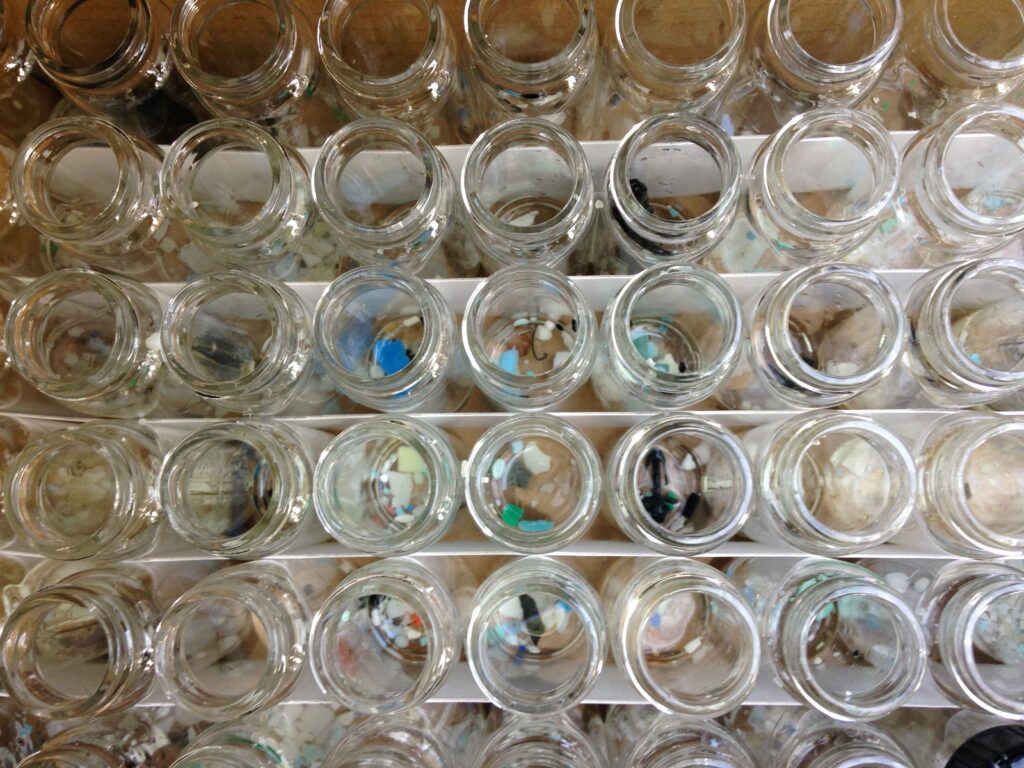
Photo: Real samples from the North Pacific Gyre laid out on Katie’s kitchen table ready to be packed!
From the very beginning, these toolkits were never meant to feel like products. They were created to be care packages sent from one human to another. Every box carried the same intention: You do not have to do this work alone.
And teachers felt it.
Emails started coming in almost immediately, and what they noticed first was not just the content; it was the care. All materials were included to ensure no late-night prep was needed. The kits were reusable, durable, and intentionally free of single-use, throwaway materials. In a world where most classroom science kits are designed to run out and be reordered year after year, this was something different. For educators already stretched thin, it felt like someone had finally designed something with their reality in mind.

Photo: Algalita’s first toolkit, The Debris Science Investigation Kit (2012)
Word spread quickly, not through marketing, but through trust. Over time, requests began arriving from places I did not recognize, schools I had never contacted. It felt like the kits were being carried forward by people who understood exactly why they mattered. That momentum made it clear this was no longer something I could carry alone.
Not long after, I stepped into the role of Executive Director, and at almost the exact same time, Anika Ballent stepped in to lead our education programs. The timing could not have been more perfect. Anika brought a surge of creativity, thoughtfulness, and fearless experimentation to the toolkit program. Where I had been figuring things out as I went, she began reimagining what Algalita’s broader kit efforts could become.
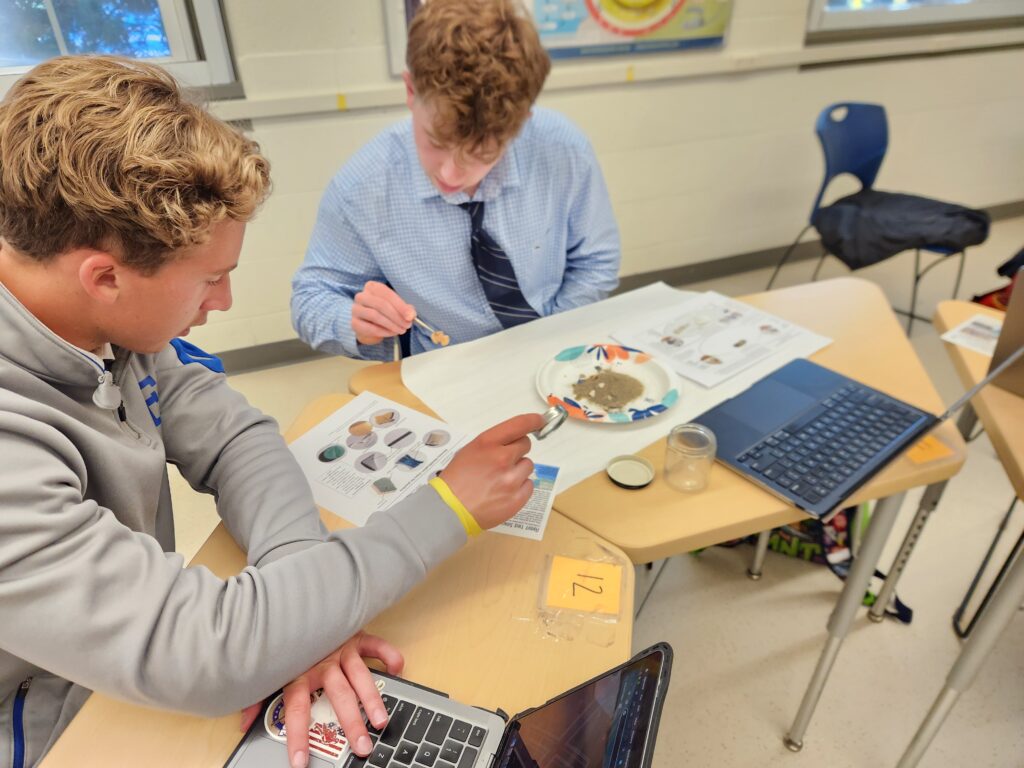
Photo: Students at Gilman School in Baltimore exploring the Synthetic Sand Investigation Kit (2025) Credit: Tim Lauer
She did not just add new topics. She reshaped the experience. Synthetic Sand. The Traveling Plastic Ocean book set. Microfibers Investigation. Each one built on the same core philosophy, but she pushed it further: making the kits more immersive, more beautiful, and even easier for teachers to use while staying true to the real, messy complexity of the science itself.
Watching Anika take the toolkits into their next chapter was one of the greatest gifts of my career. It meant the program no longer lived inside one person’s head or hands. It had become something shared, something bigger than either of us, rooted in the same respect for educators that had sparked it in the first place.
As the number of kits continued to grow, we reached another turning point. The work behind the scenes had become just as important as the ideas themselves. That is when Trina Miller joined our team.
Trina brought steadiness, systems, and an incredible human touch to the program. She took on the work of coordinating volunteers, organizing materials, packing boxes, and making sure each toolkit left our lab with the same care it always had. What had once been boxes stacked in my living room had become a living, breathing operation, still deeply personal, but finally supported by someone whose role was to protect the integrity of the process.
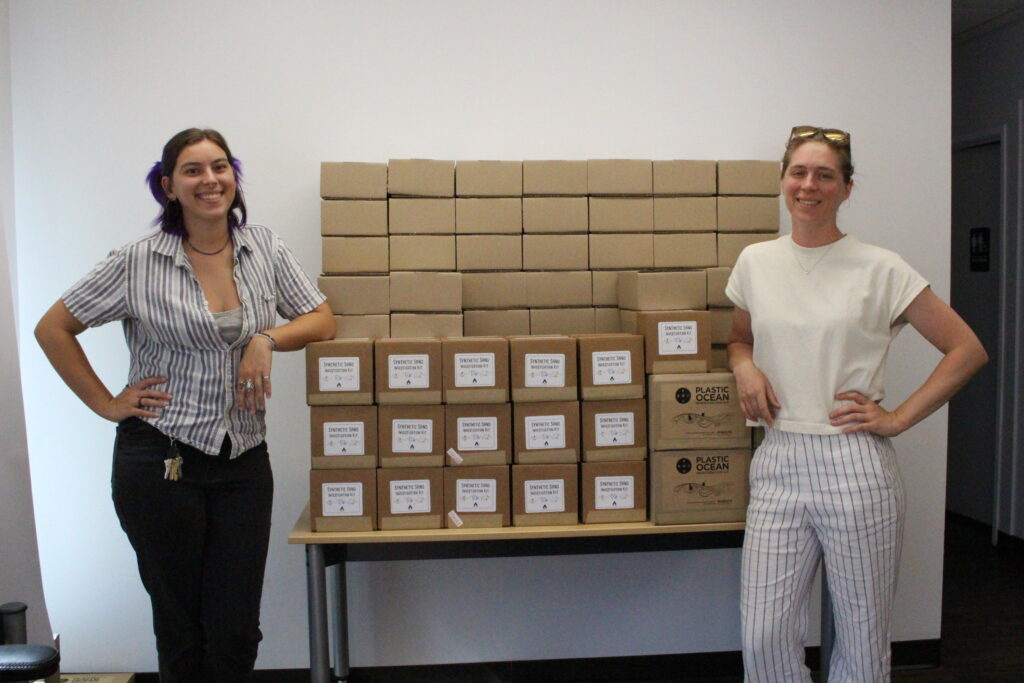
Algalita’s Education Director, Anika, and Education Coordinator, Trina, sending out toolkits (2024)
Emily, our Engagement Director, has become an essential part of how the toolkit program continues to grow. She does not market the kits. She builds relationships. By spending time with educators at conferences, listening to their challenges, and sharing resources in real conversations, she has helped create a network of teachers who trust where these toolkits come from and how they are meant to be used.
Today, those same toolkits that once lived on my kitchen table now reach far beyond anything I could have imagined. Because they are designed to be reused year after year, a single kit often serves hundreds of students over its lifetime. Together, they have likely supported learning for hundreds of thousands of young people across the world.
What still matters most to me is that these resources remain completely free for U.S. public school educators. That has only been possible because of the foundations and individual supporters who believed in this idea long before it was proven.
This program is also sustained by a team and community who treat every box with the same care it received at the beginning. From Anika’s vision, to Trina’s steady hands, to Emily’s relationship building, to the volunteers who sort, pack, and ship, many of whom are educators themselves, this work has always been carried forward by people who understand classrooms from the inside.
More than 3,400 toolkits later, the heart of the program has not changed. They are still meant to travel from one teacher to another, quietly reminding each of them that they are not alone in this work. And as long as educators keep asking for tools that help them teach the science of our changing world, we will keep finding ways to put something useful into their hands.
With deep appreciation for the educators who make this work possible,
Katie Allen
Executive Director, Algalita
