Over the past six months, community members throughout Long Beach have been helping us take a closer look at the health of Alamitos Bay.
Through Clean Bay Collective, volunteers collect water quality measurements at locations throughout the bay and its connected waterways. Our goal is to better understand what is normal, how conditions vary from place to place, and how the ecosystem may change over time.
This is especially important as the AES power plant moves toward retirement and the cooling pumps that have circulated water through Alamitos Bay for decades eventually shut down. Before we can understand what changes, we first need to understand the conditions we have today.
What We Learned
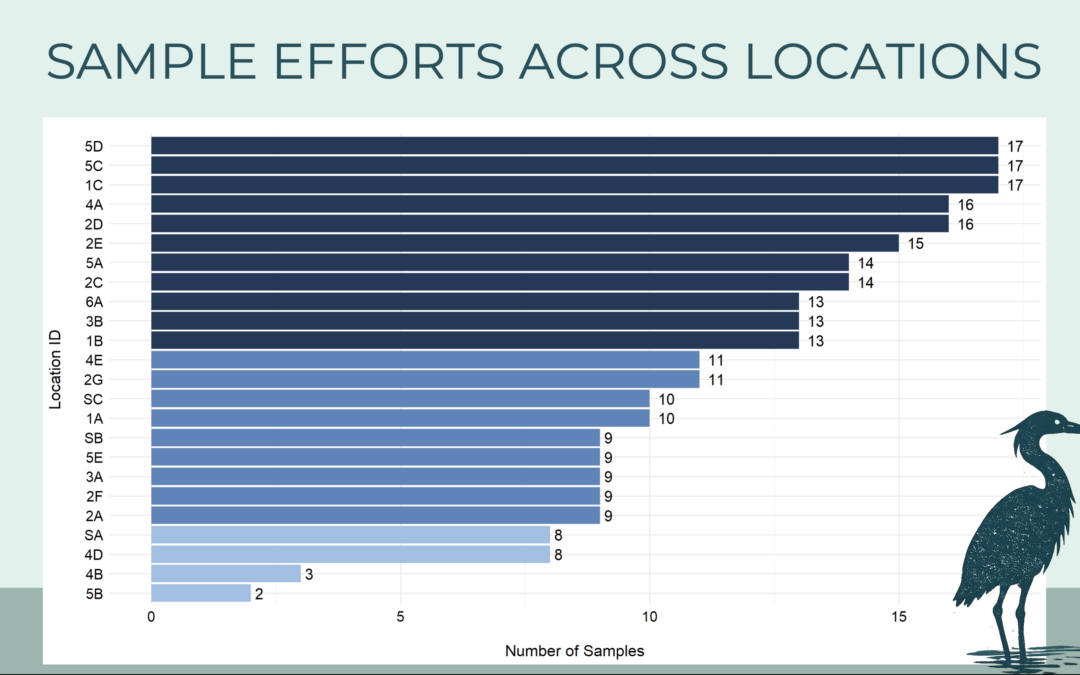
During our first six months, community scientists collected 271 water quality samples across 23 monitoring locations, including Colorado Lagoon, Marine Stadium, Naples Canals, Bay Shore, and the open bay.
Overall, the results were encouraging. Dissolved oxygen was generally in the Good to Excellent range, with no widespread areas of consistently low oxygen. pH and nitrate were also relatively consistent throughout the bay.
Salinity showed more variation between locations, with some sites consistently measuring above 32 parts per thousand and others below 30. Tide height alone did not appear to explain those differences, suggesting that local circulation, freshwater inputs, and other environmental factors may also play a role.
Temperature also gave us an important lesson in interpreting community-collected data. Water generally warmed throughout the day, meaning some differences between sites may reflect the time they were sampled. As we collect more data across different seasons and times of day, we’ll be better able to distinguish these natural variations from longer-term changes.
Most importantly, we now have something that didn’t exist before: a community-driven baseline for Alamitos Bay that we can continue building on and use to compare conditions in the future.
Want to take a closer look at the data? View the presentation we shared at our July 25 Clean Bay Collective Community Update, including maps, graphs, and findings from the first six months of monitoring.
Community Science + Research
Clean Bay Collective is a partnership between Algalita and Moore Institute for Plastic Pollution Research, bringing together community participation and scientific expertise.
Moore Institute has played an important role in helping us analyze and understand the data collected by our community scientists. Their team developed the maps, graphs, and analyses from our first six months of monitoring and will continue working with us to validate our methods, strengthen our data collection, and ensure the information we’re gathering is scientifically robust.
We’re also looking beyond water chemistry. Through Clean Bay Collective, Alamitos Bay was established as a Place of Nature on iNaturalist, bringing together 8,987 wildlife observations representing 1,033 species into one searchable record. Together, these different sources of information are helping us build a broader picture of the health of the bay.
What’s Next
As we move into Phase Two, we’ll continue community water quality testing while improving our methods based on what we learned during the pilot.
We’re also introducing a DataPod, which measures dissolved oxygen, pH, temperature, conductivity, and depth every 30 minutes. This continuous dataset will complement the observations collected by community scientists throughout the bay and help us further evaluate and strengthen our monitoring methods.
The longer we continue this work, the more useful our baseline will become for understanding how Alamitos Bay changes over time.
Join Our Water Quality Testing Team
We’re looking for community members to join the next phase of Clean Bay Collective. No previous experience is needed. We provide the training, equipment, and support.
